The Root Intrusion Problem Beneath Penn Valley's Wooded Lots
Penn Valley is one of the most heavily wooded pockets on the Main Line, and that is exactly what creates the trouble underneath it. The oak, beech, and maple trees that shade the lots along Hagys Ford Road and the streets near Penn Valley Park have root systems running 20, 30, or even 50 feet from the trunk. Sooner or later, those roots find a small crack in an aging clay or cast iron sewer lateral, and once they do, they grow until they choke off the line completely. The damage often shows up first as a slow drain or a gurgling toilet, but by the time it reaches the surface as a soggy patch in the yard or a sinkhole near the line path, a full sewer line replacement is often on the table.
Trenchless sewer repair in Penn Valley, PA is one of the few solutions that addresses this kind of damage without making the problem worse. Pipeline Excavation runs CIPP pipe lining or pipe bursting from inside the line through two small access points, which keeps the tree canopy, the established understory, and the long sweeping driveways that define Penn Valley properties exactly where they belong.
Find Out What Is Happening to Your Penn Valley Sewer Line
A camera inspection tells us exactly where the roots are, how far the damage has spread, and whether CIPP lining or full pipe replacement is the right call for your property.
How Trenchless Repair Leaves the Surface Alone
A trenchless sewer repair accesses the damaged line from inside the existing pipe instead of from above. Two small access points are dug at the ends of the section that needs work, and the actual repair happens between them through CIPP pipe lining or pipe bursting. The lawn, the trees, and the soil structure that took 40 years to mature stay exactly where they are. For Penn Valley properties, a no-dig sewer repair is often the only way to fix a failing line without sacrificing what makes the property feel like Penn Valley in the first place.
Sewer Services Tuned to Penn Valley's Conditions
A sewer line under a wooded Penn Valley lot is dealing with a different set of pressures than one in town. Roots are the most common culprit, but soil shift, aging materials, and partial collapses all show up out here. Pipeline Excavation offers a complete range of trenchless services to match whatever the camera ends up revealing.
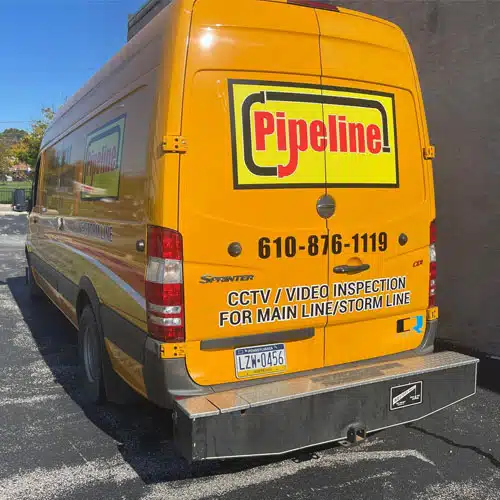
Video Camera Inspection
A camera inspection is non-negotiable on a Penn Valley repair. The footage shows whether you are dealing with surface-level root intrusion, a partially collapsed section, or a fully failed line, which is what determines which method comes next.
Cured-in-Place Pipe Lining
When the existing line is cracked or root-invaded but the pipe itself is intact, CIPP lining seals out the roots and rebuilds the interior. The new surface has no joints for future roots to find.
Pipe Bursting
For the lines roots have actually crushed, pipe bursting replaces the failed line entirely. A bursting head fractures the old pipe outward while a new HDPE pipe is drawn into place behind it. The path of the original sewer is preserved underground, which means the tree canopy above stays untouched. This is often the right answer for older Penn Valley homes with collapsed clay tile.
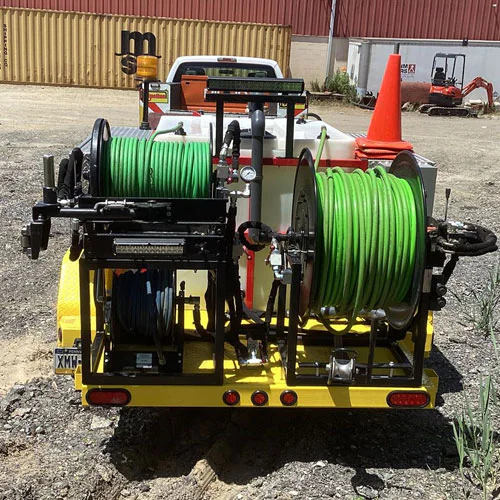
Drain and Lateral Cleaning
Before lining and after pipe bursting, the line gets a thorough cleaning. Hydro jetting clears out root debris, sediment, and grease so the new pipe starts the next 50 years in the best possible condition.
Each step in the process is built around minimal disruption above the surface. That is what allows a Penn Valley trenchless repair to actually fit the property it is happening on.
The Root Intrusion Problem, Explained
Root intrusion is one of the most misunderstood failures we see on Penn Valley sewer lines. Most homeowners picture a single root pushing through a pipe. The reality is more gradual and more destructive, and understanding it is part of what determines whether a trenchless repair can save the line.
Tree roots find sewer lines because they are looking for water and oxygen, both of which leak out of small cracks at pipe joints, condensation points, and hairline fractures in older clay tile and cast iron. Once a root finds that source, it sends finer rootlets through the opening. Inside the pipe, those rootlets fan out, latch onto the inner wall, and grow toward the steady supply of water and nutrients moving through the line. Over a few seasons, a hair-thin intrusion turns into a dense root mass that chokes the line down to a trickle.
At that stage, traditional snaking only solves the symptom. The line gets cleared, but the entry point remains, and within a year the roots are back.
That is where trenchless repair earns its place on Penn Valley properties. CIPP lining seals the cracks and joints from inside, leaving roots no opening to exploit. Pipe bursting replaces the failed line entirely with HDPE, which has fused joints and a smooth interior that roots cannot penetrate. Both methods address the root cause without removing the trees that caused it, which is the trade-off Penn Valley homeowners actually care about.
The Pipeline Excavation Standard on Penn Valley Properties
Penn Valley properties demand a different kind of attention than a standard sewer repair. Our team has spent years working on root-driven failures across the Main Line, and we know the difference between a line that can be saved with CIPP and one that needs to be replaced. As a female-owned, family-run business that has worked these neighborhoods since 2008, we treat the trees on your property the way you do. Pipeline Excavation is certified by Perma-Liner for CIPP work, NASSCO certified for inspection and rehabilitation standards, and PA PHCC certified for general plumbing work. Credit card payments are accepted and financing is available on larger jobs.
Penn Valley Property Owners on Their Experience
Best price, best service, I will only call Pipeline in the future. They answer the phone, actually answer it, with a human. They were courteous, punctual, and MORE than reasonable. My sewer line was blocked by tree roots. Pipeline resolved the problem and even notified the township about other issues beyond my control that have also now been resolved. I know using a local company, with local connections, worked to my benefit.
I have worked with Pipeline on many occasions and have had a good experience every time. Given the urgency of the situations, they are always punctual, professional and fair. I would recommend them for any of the services they provide. I've worked with other companies for main replacements, and Pipeline is by far the best in the area.
Wooded Properties We Cover Beyond Penn Valley
Penn Valley is one of the most wooded pockets of Lower Merion, but the same root-driven sewer challenges show up across the township. We work on properties in Narberth, Bryn Mawr, Gladwyne, Wynnewood, and Bala Cynwyd, plus the deeper-lot homes in Villanova where root intrusion is just as common. If you have mature trees on your property and a sewer line that is starting to act up, we are familiar with the territory.
Penn Valley Trenchless Sewer Repair FAQs
Will I have to remove a tree to fix my sewer line?
Almost never with trenchless. The whole reason trenchless methods exist is to repair the line without disturbing what sits above it. CIPP lining and pipe bursting both work through the existing pipe path, so the tree above stays exactly where it is. For Penn Valley homes with mature trees along the front lawn or shading the driveway, this approach preserves what would otherwise have to come down.
How do I know if tree roots are causing my sewer problems?
The most common signs are slow drains in more than one fixture, gurgling toilets, recurring backups that come back even after a snaking, and soft or unusually green patches in the yard near the sewer line. A camera inspection is the only way to confirm it for sure. The footage shows us whether roots are in the line, how much intrusion there is, and how the pipe is holding up around them.
Will the tree roots come back after a trenchless repair?
Very rarely. CIPP lining creates a joint-free interior surface that roots cannot penetrate, because there are no gaps at the old pipe joints for them to enter through. Pipe bursting replaces the old line with fused HDPE pipe, which also has no joints for roots to invade. Both methods deliver a long-term solution to root intrusion, not a temporary fix.
Save Your Trees, Restore Your Sewer Line
Penn Valley's tree canopy is one of the things that makes the neighborhood feel like home. A trenchless repair keeps it that way while solving the root intrusion underneath. Pipeline Excavation can inspect your line, show you what is going on, and recommend the trenchless option that fits.